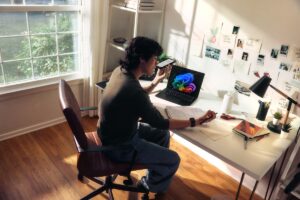
Feierabend (fye-er-AH-bent) is a German compound word — “Feier” (celebration) + “Abend” (evening) — that literally means “celebration of evening” but is used to describe the end of the working day and the firm cultural norm of stopping work at that point. It is a concept that does not exist in quite the same form in most Anglo-American workplace cultures. Here is what it means in practice.
The Cultural Reality
Feierabend is a genuine norm, not just a stated value. Most German office workers leave at or close to their contracted hours (typically 37–40 hours per week) and do not feel obligated to stay late to signal dedication. After-hours email responses are not expected as a default. German labour law (Arbeitszeitgesetz) limits working hours to a maximum of 8 hours per day (10 in specific circumstances), requires an 11-hour rest period between working days, and restricts Sunday working. These are enforced limits, not aspirational guidelines. The comparison to comparable economies: a 2023 OECD comparison found German workers average approximately 1,340 hours per year (among the lowest in the OECD); South Korean workers average 1,870; US workers average 1,810; British workers average 1,530. Germans work fewer hours on average than almost all comparable high-income countries and produce comparable or greater GDP per hour worked. The meaning: Feierabend reflects a cultural consensus that work is not an identity — it is something you do so you can live. The question “what do you do?” as an identity-defining opener is much less common in Germany than in the US or UK. Germans have a stronger separation between professional identity and personal identity.
What This Looks Like Day-to-Day
Punctuality into and out of work: Germans are punctual arriving at work and punctual leaving. A meeting scheduled to end at 5 PM will typically end at 5 PM (or there is explicit agreement to run over). Urlaub (annual leave): Germans take their vacation. The statutory minimum is 20 days (for a 5-day week) with most professional contracts providing 25–30 days. It is taken — not saved up and quietly forfeited as in some US corporate cultures. Email responses during vacation: most German professionals set an out-of-office response during Urlaub and do not check or respond to work email. Urgent matters are handled by the designated Vertretung (cover colleague). Meetings: Germans are direct and meeting-averse. Meetings are held when a decision or discussion that cannot happen asynchronously is genuinely needed. Meetings that should have been an email are a genuine source of frustration in German office culture. The relationship with productivity: Germany has consistently higher productivity per hour worked than the UK, France, and Spain. The data suggests that Feierabend and high productivity are not in tension. Rest and recovery, structured leisure, and predictable working hours appear to contribute to sustained productivity.
For Expats Coming From Different Cultures
The adjustment for US/Anglo expats: the culture of staying late as a signal of commitment, sending emails at 11 PM to show dedication, and treating work as an identity can conflict with German workplace norms and create both personal friction and professional misreadings. Staying very late regularly signals that you are disorganised or that you have too much on your plate, not that you are hard-working. The adjustment for Asian expats (particularly from cultures where long hours are a baseline expectation): the initial experience of colleagues leaving at 5 PM while you feel the work is unfinished requires recalibrating what “finished” means — German work culture prioritises planning and efficiency within working hours rather than extending hours as the solution to workload. The professional relationship norms: German colleagues separate professional and personal relationships more than most cultures. The team lunch, Feierabend beers (the after-work drinks that actually respect Feierabend — a small social event that ends early), and organised team events are the primary social contexts in German professional life. Invitations to dinner at a colleague’s home are reserved for established friendships, not casual professional contacts.