This site is supported by ads. Please consider disabling your ad blocker and clicking on an ad. Thank you!
Reposted from Germany Mail|Deutsche Post Complete Guide to Sending Letters, Online Tutorial!
by : 一分钱·腿腿快跑

Living in Germany, you’re probably no stranger to receiving and sending letters. From the moment you open a bank account, letters start piling up — written communication is a key and formal way to get things done here. But what’s the standard format for sending a letter in Germany? What are the sizes and prices? How do you buy stamps? If you’re not entirely sure, let me walk you through everything step by step.
Envelope Format
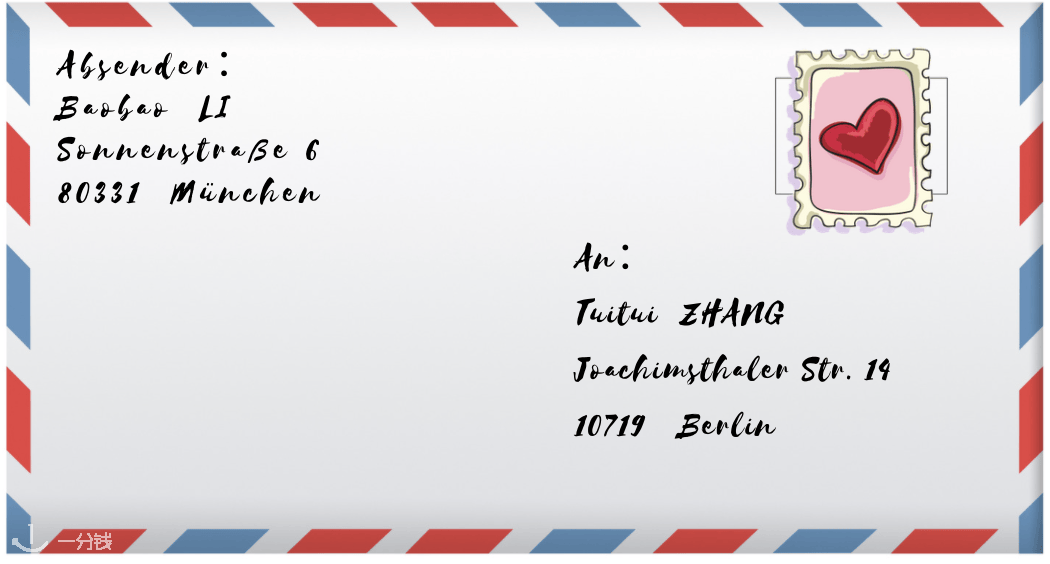
The first step is to write the recipient and sender information on the envelope. All contact details go on the front — leave the back blank for important info!
Stamp in the top right corner
Sender info in the top left corner
You can start with “Absender” (sender) or leave it out — the top left is generally understood as the sender’s address.
Line 1: First name, Last name (capitalize both; if you’re worried about confusion, write the last name in all caps)
Example: Baobao Li or Baobao LI
Line 2: Street name, building number, apartment number (building number is usually enough, but add apartment if there are many residents)
Example: Sonnenstraße 6 (Nr.34)
Line 3: Postal code, City
Example: 80331 München
Line 4: Deutschland
Recipient info in the bottom right corner
You can start with “An” (to) or leave it out — it’s assumed to be the recipient.
Line 1: First name, Last name
Line 2: Street name, building number, apartment number
Line 3: Postal code, City
Line 4: Nach + Country name
Note: If sending abroad, e.g., to China, you can write the address in Chinese for the first three lines, and the last line should be Nach China!
Example:
Buying Envelopes and Stamps
Envelopes (Briefumschlag)
You can buy envelopes at post offices, supermarkets, drugstores, stationery shops, and even at Euro shops (like Tedi or Action). Plenty of styles to choose from.
Stamps (Briefmarke)
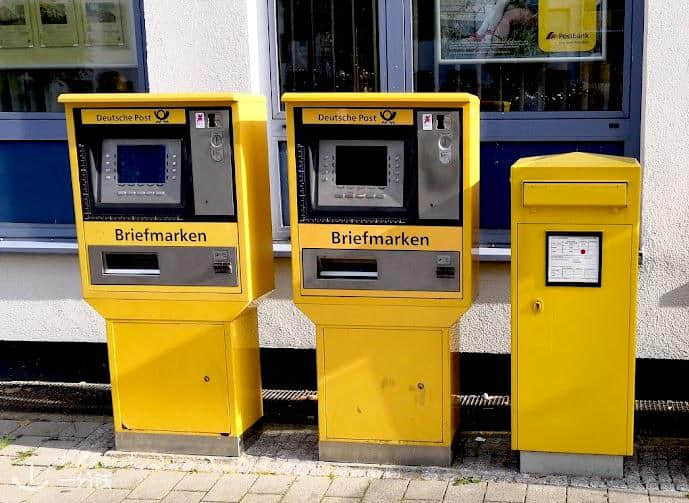
Stamp vending machines
Every Deutsche Post branch has a stamp vending machine where you can buy stamps of different values.
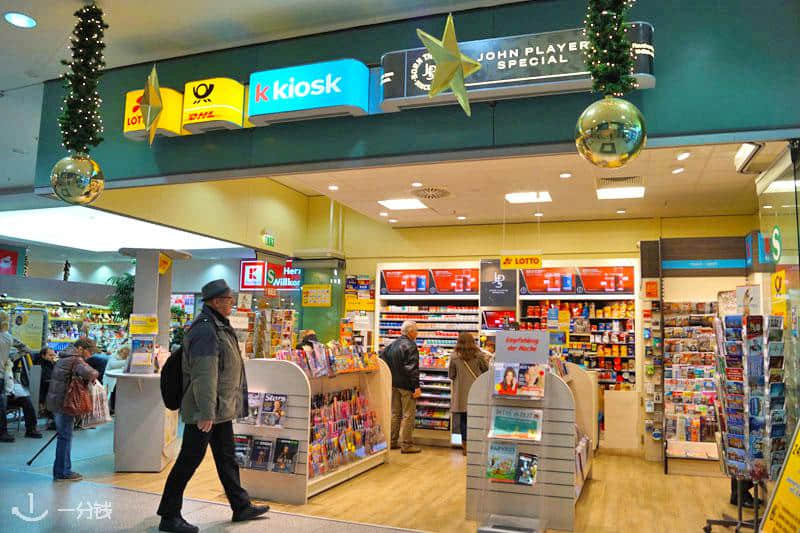
Kiosk
Many kiosks, especially those selling magazines, also sell stamps.
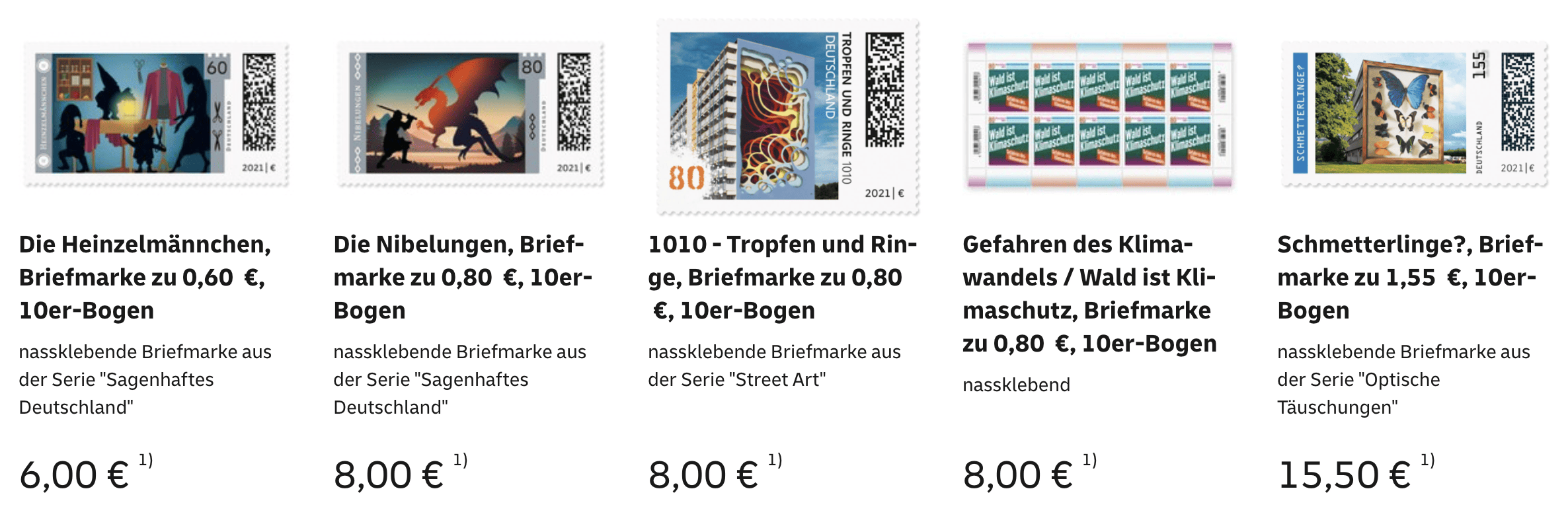
Deutsche Post website
1. Order physical stamps online — choose from cool designs, delivered next business day.
2. Buy digital stamps online
This option is great if you prefer DIY and don’t want to visit a post office. You can see exact costs, choose the best option, and avoid hunting for a post office. Here’s how:
First, go to the Deutsche Post website (click here ) and register/log in.
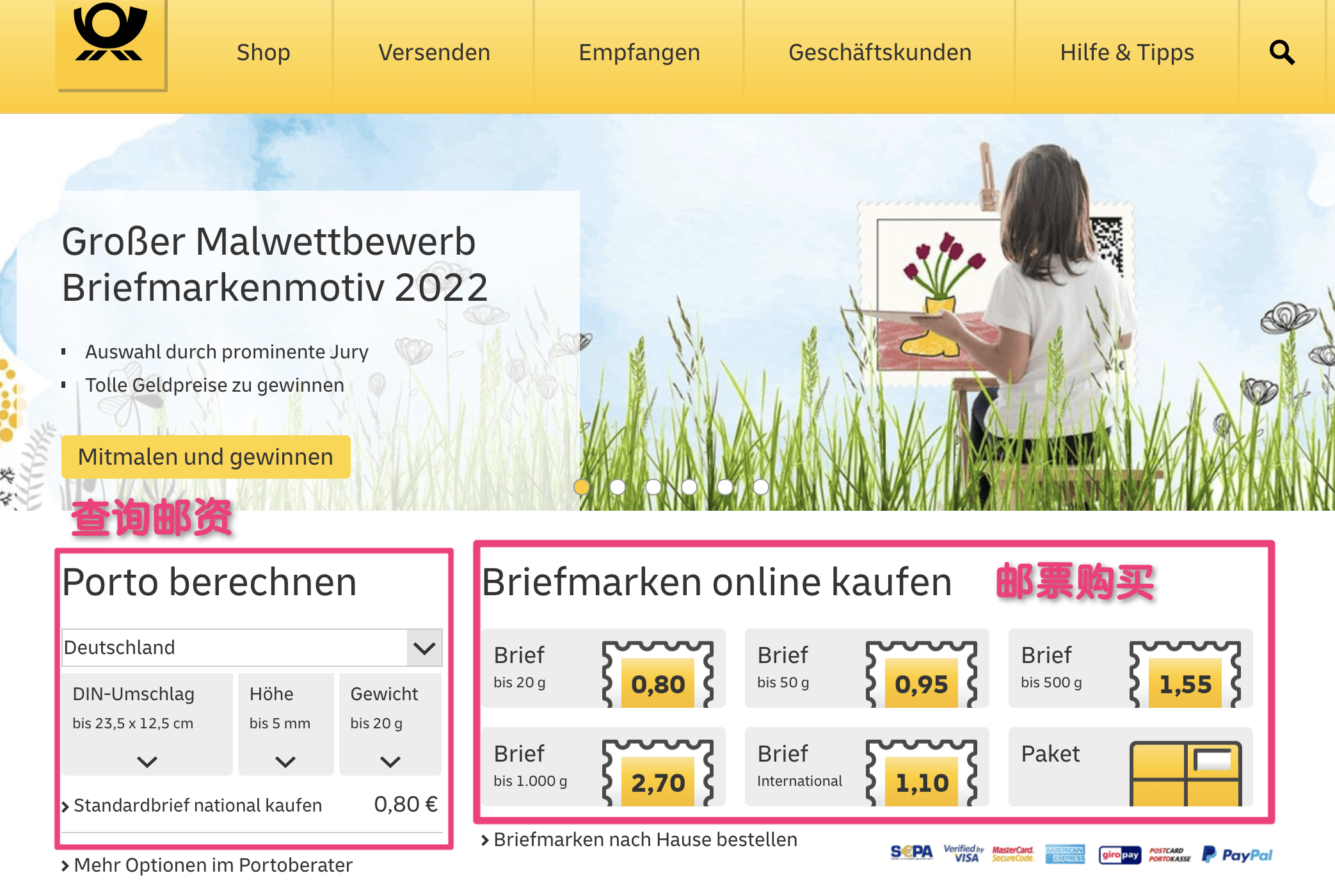
Select the stamp you want, and you’ll see this page
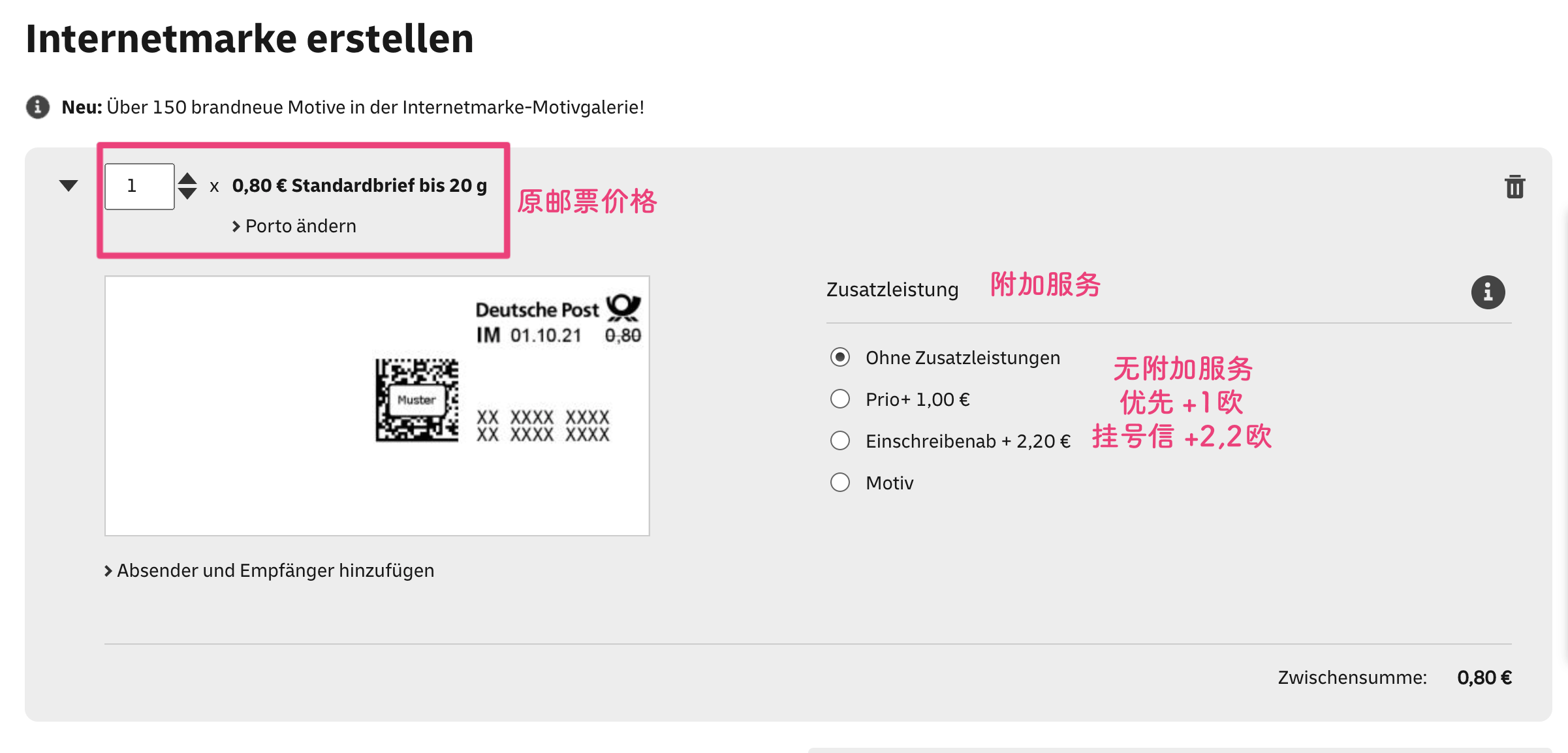
Choose any additional services you need, then pay. You’ll get a QR code and a code like this:
Print the QR code and stick it on the envelope, or simply write the code by hand — perfect if you don’t have a printer!
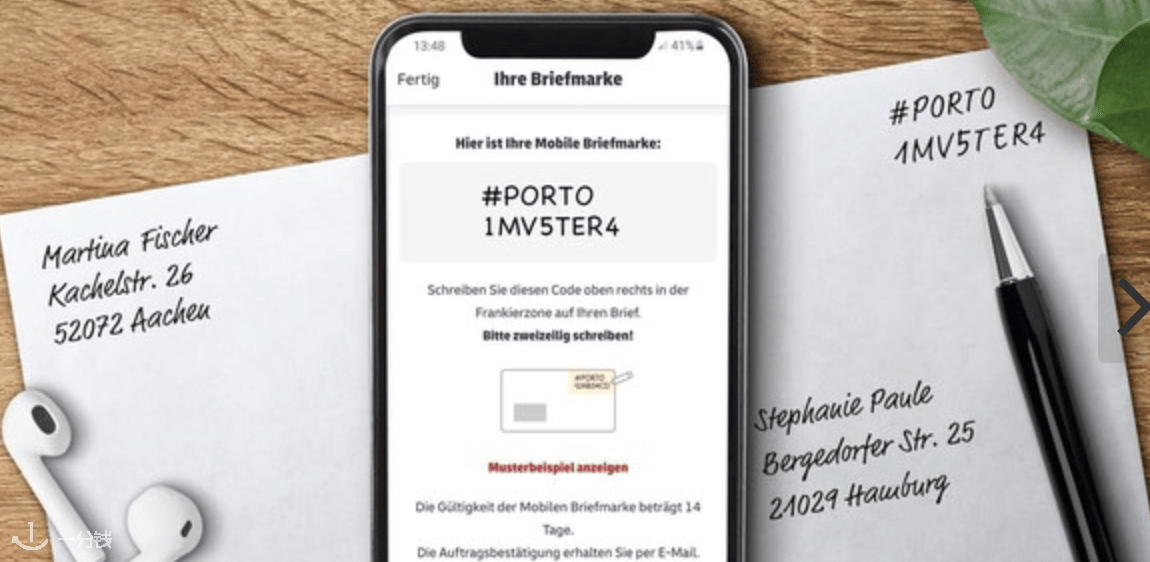
Image | Deutsche Post
Here are the domestic letter rates for different sizes, so you know what to buy:
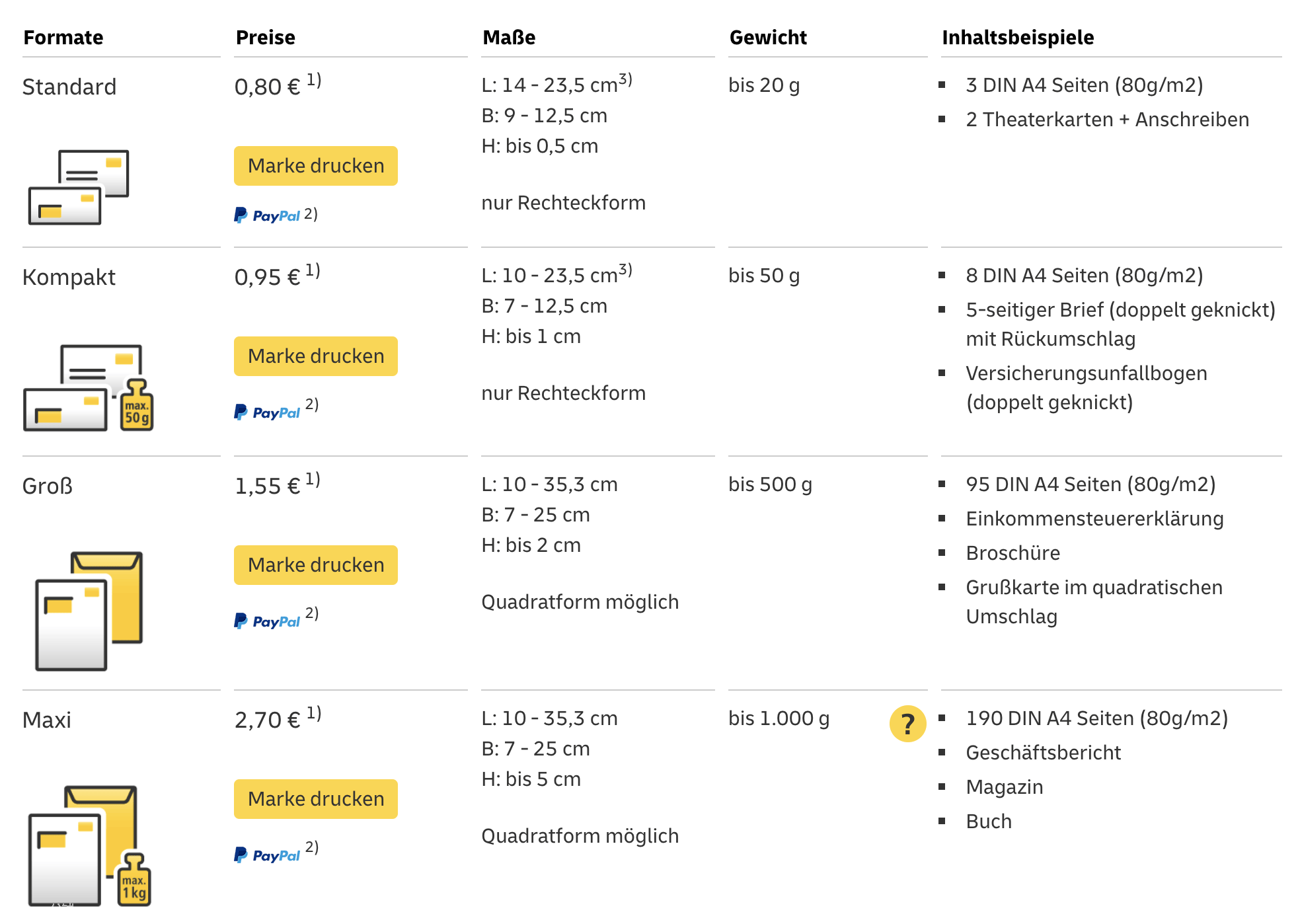
A standard domestic letter costs €0.80; international standard letter costs €1.10.
Registered Mail (Einschreiben) Explained & Purchase
Buying Registered Mail
For important documents like contracts or applications, you can choose registered mail (Einschreiben). Here’s how to buy it online:
Find “Einschreiben” on the Deutsche Post website, select the type you want, and purchase it. (The process is similar to buying a digital stamp, but with tracking and signature options.)