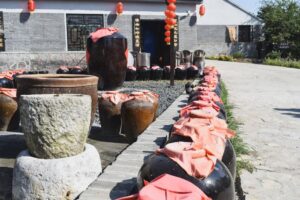
Korean cuisine has one of the world’s most sophisticated fermentation cultures. Fermentation in Korea is not a marginal technique for preservation — it is the central flavour principle of the cuisine. Understanding kimchi, doenjang, ganjang, and gochujang is understanding Korean food at its most fundamental level.
Kimchi: Far More Than Cabbage
Kimchi (김치) is the fermented vegetable dish that most people associate with Korean food, but “kimchi” is a category, not a single product. There are approximately 200 varieties. The most common: Baechu-kimchi (배추김치) — napa cabbage kimchi; the standard, made with cabbage, gochugaru (Korean red pepper flakes), fish sauce, salted shrimp, garlic, ginger, and green onion. The fermentation: napa cabbage is salted to draw out water (osmosis), rinsed, then coated in the gochugaru paste with the aromatics. The paste contains the fish sauce and shrimp that provide the amino acids and salt that feed the lactobacillus bacteria. At room temperature (20°C), kimchi becomes sour and fizzy within 1–2 days; in the refrigerator (or traditional onggi ceramic jars buried in the ground), it ferments slowly over weeks to months. Freshly made kimchi (geotjeori) is eaten immediately without fermentation. Aged kimchi (mukeunji) — kimchi fermented for 1–3 years — is extremely sour and used in cooking (kimchi jjigae — kimchi stew — is best made with aged kimchi; fresh kimchi makes a watery, unbalanced result). Other kimchi varieties: Kkakdugi (깍두기) — cubed radish kimchi; Oi-sobagi (오이소박이) — stuffed cucumber kimchi, a summer variety; Nabak-kimchi (나박김치) — water kimchi, a light non-spicy broth; Baek-kimchi (백김치) — white kimchi without gochugaru (for people who cannot eat spicy). Kimjang (김장): the annual kimchi-making tradition — typically in November–December when the cabbage is harvested and the cold weather provides ideal fermentation conditions. Families traditionally made kimchi together; UNESCO listed kimjang as an Intangible Cultural Heritage in 2013.
Doenjang, Ganjang, and Gochujang: The Three Pastes
Korean fermented pastes (jang — 장) form the flavour foundation of the cuisine in a similar way to how French cuisine relies on stock or Italian cuisine relies on olive oil. Doenjang (된장 — fermented soybean paste): made from meju (blocks of cooked soybeans, dried and naturally inoculated with Aspergillus mold and bacteria, then fermented). The meju are packed in brine; the liquid that separates becomes ganjang (soy sauce); the remaining solid becomes doenjang. Doenjang is earthier, more pungent, and more complex than Japanese miso — it is fermented with multiple microorganisms rather than a single controlled Aspergillus oryzae culture. Doenjang jjigae (된장찌개) — soybean paste stew — is considered the Korean comfort food equivalent of what borscht is to Eastern Europe. Ganjang (간장 — Korean soy sauce): the liquid separated during doenjang production. Traditional ganjang (joseon-ganjang — Joseon soy sauce) is lighter in colour and saltier than Japanese shoyu; modern Korean ganjang includes Japanese-influenced industrial varieties. Gochujang (고추장 — fermented red chilli paste): made from gochugaru, glutinous rice, meju powder, and salt. The combination of chilli heat, fermentation tang, and natural sweetness from the glutinous rice is the defining flavour of modern Korean cuisine. The umami depth comes from the fermented soybean component; the heat from the gochugaru; the body from the rice. Gochujang is used in bibimbap, tteokbokki (spicy rice cakes), and as a base for dozens of Korean sauces and marinades.