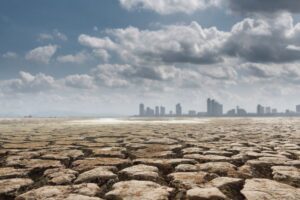
**How climate change affects extreme weather — physical mechanisms**: the direct effect of rising atmospheric temperature is increasing the atmosphere’s water-holding capacity (for every 1°C temperature rise, maximum atmospheric water content increases approximately 7%, following the Clausius-Clapeyron equation). More moisture means that when precipitation occurs, it’s more concentrated and intense — this is the fundamental physical mechanism behind intensifying heavy rainfall and flooding events. Simultaneously, increased surface evaporation accelerates moisture loss in dry areas, exacerbating drought. More violent when raining, drier when not — this is the core mechanism of extreme weather “polarization” against the backdrop of global warming.
## Typhoons and Tropical Cyclones
Global warming’s effect on typhoons (western Pacific)/hurricanes (Atlantic)/tropical cyclones (Indian Ocean) is not increasing their “number” but changing the “intensity distribution”: the proportion of major storms (Category 4-5) is rising significantly; rapid intensification events (sudden intensity increases within 24 hours) are increasing (because warmer upper ocean layers provide richer thermal energy); storms maintain high intensity longer in their lifecycle; post-landfall weakening slows (due to carrying more water vapor). Scientific research shows that the probability of supertyphoons (maintaining high intensity when making landfall) has risen substantially over the past 40 years; sea level rise makes typhoon storm surges more severe (storm surge height = typhoon intensity × sea level height).
## Heavy Rainfall, Flooding, and Floods
**Urban extreme rainfall intensification**: urbanization + climate change combined effects, urban extreme precipitation intensity increases (urban heat islands alter local atmospheric convection). In the Zhengzhou July 2021 event, rapid urban expansion (large amounts of impervious surface, drainage system design standards lagging) combined with extreme precipitation as compound causes of major disaster. **Major flood frequency increases**: Climate Attribution Studies show the 2021 European floods (Germany, Belgium) had 1.2-9 times higher probability of occurrence against the backdrop of climate change; the 2022 Pakistan floods (inundating one-third of the country) were made approximately 2 times more likely by climate change.
## Drought and Wildfires
Global warming intensifies drought by increasing evapotranspiration (surface evaporation + plant transpiration) and altering precipitation distribution. Drier vegetation + hotter summers = exponentially rising wildfire risk. Siberia, Canada, the western United States, Australia — formerly “temperate humid” regions are rapidly transitioning to high wildfire risk zones. Climate scientists propose “Fire Season Extension”: North American fire seasons have extended approximately 75 days over the past 40 years.
See [The Scientific Basis of Global Warming](https://sunqi.org/climate-change-science-basics-en/) and [Climate Migration and Adaptation](https://sunqi.org/climate-migration-adaptation-en/).