Berlin has a very large public transport system that is — except in winter — very reliable.
Public transport includes S-Bahn (urban railway), U-Bahn (subway), trams, buses, and even some ferries.
While the S-Bahn is operated by Deutsche Bahn, the rest of Berlin’s public transport is run byBVG.
Since they are all part of theVBB (Verkehrsverbund Berlin-Brandenburg), tickets bought for the S-Bahn are also valid on the U-Bahn, and vice versa.
Using public transport in Berlin is a great idea because the streets are very busy during rush hour and traffic jams are common.
Berlin S-Bahn
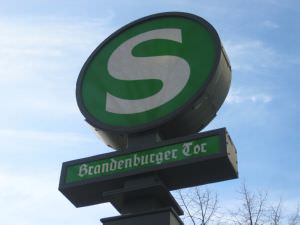 Berlin’s S-Bahn is notorious for delays and problems in winter.
Although the trains are generally in good condition and run every 5 to 10 minutes, Berliners don’t rate the S-Bahn highly.
What most Berliners don’t realize is that the S-Bahn runsalmost 24/7 on weekends.
This will save you a lot of taxi fare, especially compared to other German cities. But even if you need a cab occasionally, Berlin’s taxis are much cheaper than in most other European capitals.
Ringbahn S41 and S42
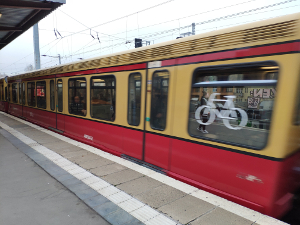 The most famous S-Bahn line in Berlin is definitely the Ringbahn.
Two S-Bahn lines, S41 and S42, run around Berlin in a circle, hence the name Ringbahn.
The track is 37 km long and passes through many of Berlin’s neighborhoods.
On any given workday, about 400,000 passengers use the Ringbahn to get around Berlin.
When Berlin was divided into East and West, the Ringbahn was also split. It wasn’t until 2002 that the Ringbahn started running uninterrupted again.
Today, you sometimes hear the expression “Doghead” for the area inside the ring.
If you have a vivid imagination, you can see the shape of a dog’s head on the map instead of a circle.
Berlin Stadtbahn
 By far the most scenic track in Berlin’s public transport system is the so-called Stadtbahn, which describes the route between Ostbahnhof and Charlottenburg.
Over the 11 km journey, you’ll pass many of Berlin’s most famous sights, including the East Side Gallery, Oberbaumbrücke, Alexanderplatz, the Reichstag, and the Kanzleramt.
There’s no more comfortable sightseeing than taking the Stadtbahn and enjoying the landmarks.
BVG Line 100
If you’re on a tight budget as a tourist and don’t need a guide telling you boring stories, here’s an insider tip.
Go to Alexanderplatz and take bus 100. This bus passes some of Berlin’s most scenic landmarks, such as Alexanderplatz, Museum Island, and the Brandenburg Gate.
Enjoy the ride from the east until you get off in the west around Zoologischer Garten. Best of all, it costs only €2.70 per person, instead of €15 for the red tourist buses.
Car-Sharing in Berlin
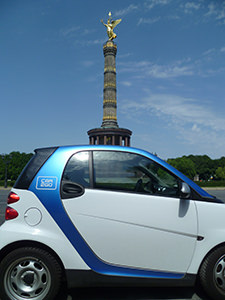 Car-sharing is the latest hot trend in Berlin.
Companies like DriveNow or Car2go offer the possibility to rent a car for short periods and drop it off anywhere in Berlin.
Read more about car-sharing in Berlin.
At first, cycling sounds like a good idea. But think again: Berlin is not really bike-friendly.
There are hardly any designated bike parking spots, but plenty of traffic on the streets.
The chance of your bike being stolen in Berlin is also high — you might buy it back at the flea market in Mauerpark.
Bike-Sharing in Berlin
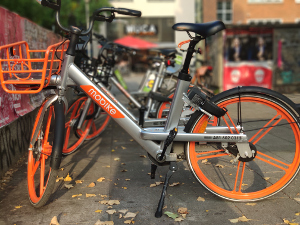 But if you feel brave and are a confident cyclist, we strongly recommend trying bike-sharing instead of risking your bike being stolen every 3 months.
In 2018, several companies like Deezer Nextbikes or LIDL Bikes appeared, allowing you to easily rent a bike anywhere within the S-Bahn Ring.
Just download the app, unlock your bike, and drop it off when you reach your destination.
No more worrying about your bike being stolen while parked outside.