Vienna (population 1.9 million) is the Austrian capital and one of the most culturally significant cities in European history. Here is what genuinely distinguishes it and where the experience is best.
The Habsburg Legacy
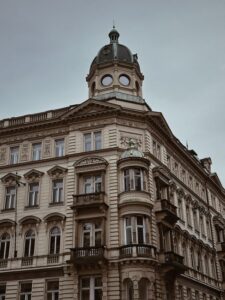
Vienna was the capital of the Habsburg Empire for approximately 600 years (the Habsburg dynasty ruled from Vienna from the 13th century to 1918, with the Austro-Hungarian Empire as its final form). At its peak (mid-19th century), the Habsburg Empire contained roughly 50 million people across Central and Eastern Europe — encompassing present-day Austria, Hungary, Czech Republic, Slovakia, Croatia, Slovenia, parts of Poland, Romania, Italy (Trieste, Lombardy-Venetia), and others. The cultural and architectural legacy of this empire concentrated in Vienna is staggering. The Ringstrasse (a 5km ring boulevard built in the 1860s under Franz Joseph I): the most concentrated collection of imperial architecture in Europe — the Kunsthistorisches Museum, Naturhistorisches Museum (identical twins on either side of the Maria-Theresien-Platz), the Parliament (Greek Revival), the Rathaus (Neo-Gothic), the Burgtheater (Neo-Baroque), the Vienna State Opera (Neo-Renaissance), and the Kunstforum all line this boulevard within a few kilometres. The Hofburg Palace: the Habsburg imperial palace complex in the centre of Vienna — so large that it contains within it the Imperial Apartments, the Sisi Museum, the Imperial Silver Collection, the Spanish Riding School, the Imperial Chapel, and the Austrian National Library. The Schönbrunn Palace (1,441 rooms): the summer palace, UNESCO listed — built to rival Versailles, with gardens that are one of Vienna’s most pleasant open spaces.
The Music Heritage
Vienna’s claim to be the music capital of the world is justified by history: Mozart, Haydn, Beethoven, Schubert, Brahms, Bruckner, Mahler, Johann Strauss I and II, Arnold Schoenberg, and Alban Berg all worked here, often simultaneously. The Vienna Philharmonic (founded 1842): one of the great orchestras. The Vienna State Opera (Staatsoper): one of the world’s leading opera houses with approximately 300 performances per season. Standing tickets (Stehplatz) for the State Opera cost €3–10 and should be booked online the day of performance — one of the greatest cultural bargains in Europe. The Musikverein (home of the Philharmonic’s subscription concerts, site of the annual New Year’s Concert): its Grosser Saal (Golden Hall) is considered acoustically one of the finest concert halls in the world. The Volksoper (more accessible, more operetta and musical): an excellent alternative for lighter repertoire.
The Coffee House and Beyond
The Viennese coffee house (described elsewhere in this series) is central to Vienna’s culture. Less commonly discussed: the Naschmarkt (Vienna’s main open-air market, with approximately 120 stalls — the best place for Austrian produce, Eastern European food, and Middle Eastern groceries, open Monday–Saturday); the MuseumsQuartier (the contemporary art quarter — the Leopold Museum, MUMOK, and Kunsthalle Wien in converted imperial stables); and the Prater (Vienna’s park, home to the 1897 Riesenrad, the giant Ferris wheel that features in The Third Man, and to the Hauptallee, a 4.5km chestnut tree avenue). The outer districts (Brigittenau, Favoriten, Ottakring): Vienna’s genuine multicultural neighbourhoods, where Turkish, Serbian, Chinese, and other immigrant communities have created diverse restaurant scenes largely invisible to the average tourist.