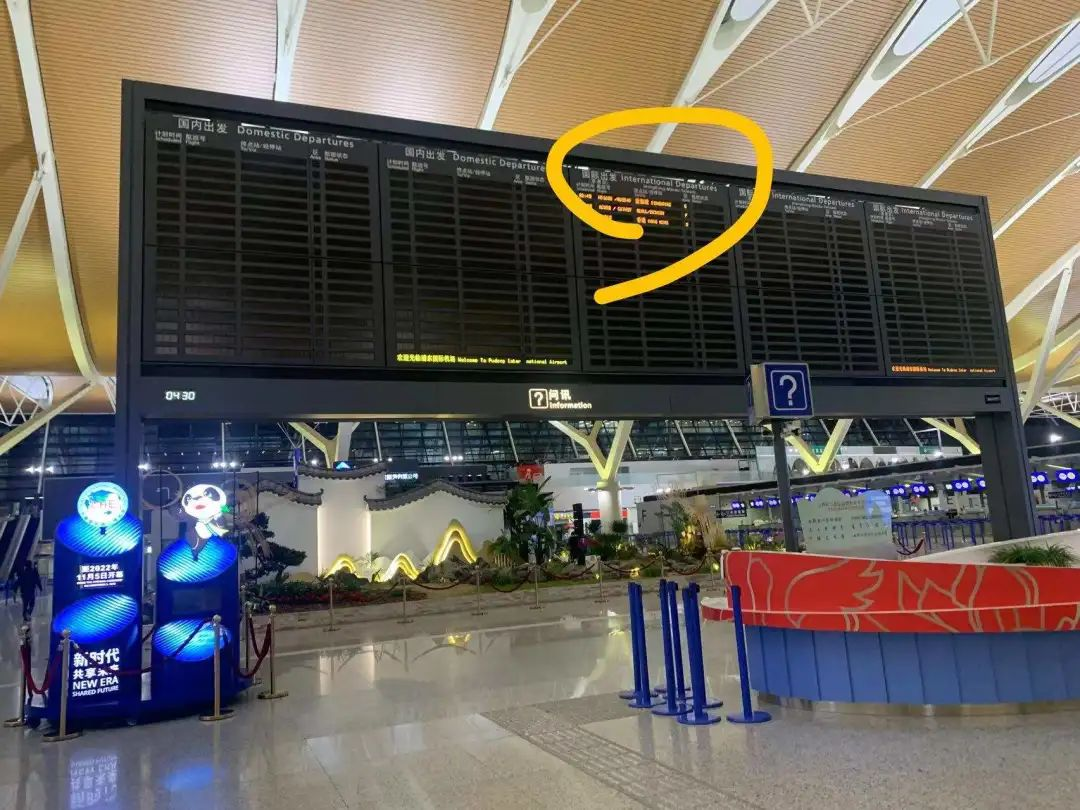
If you’re stuck at Shanghai Pudong Airport (Terminal 2) with no flight out, you’re not alone. Dozens of stranded travelers have been living here for weeks—no beds, no regular meals, no public transport. Here’s how they survive and what you need to know.
This group of failed escapees from Shanghai includes everyone from blue-collar workers to white-collar professionals, and people trying to fly to Canada, Switzerland, and Singapore. All were caught off guard: in a city known for its urban civilization, they were forced back into a primitive survival mode, trapped by the most basic needs—transportation, food, and shelter.
We spoke to several stranded passengers at Shanghai Pudong Airport (specifically Terminal 2), most of whom had been living in the airport for over two weeks. Among them: Mikey, a prospective college student who couldn’t return to his exam city; Uncle Hai, a “Fangcang” (makeshift hospital) worker from out of town; Zhang Yun, a young man from Shanxi who walked over 20 li (10 km) to the airport; and several “overseas-bound” travelers heading to Canada, Switzerland, etc. As of now, one person remains stranded; the rest have successfully left Shanghai.
Here are their escape stories and a survival guide for being trapped in the airport.
The Art Exam Army vs. the Empty Gate
Every wanderer at Pudong Airport has a ridiculous record of canceled tickets.
On April 15, after Shanghai’s official COVID briefing announced that out-of-towners could return home, Mikey started frantically booking tickets. He’s from Changchun, Jilin, and came to Shanghai a year ago for art exam prep. Recently, he got his dream school—Beijing Film Academy’s acting program—and needed to get back home to study for the college entrance exam.
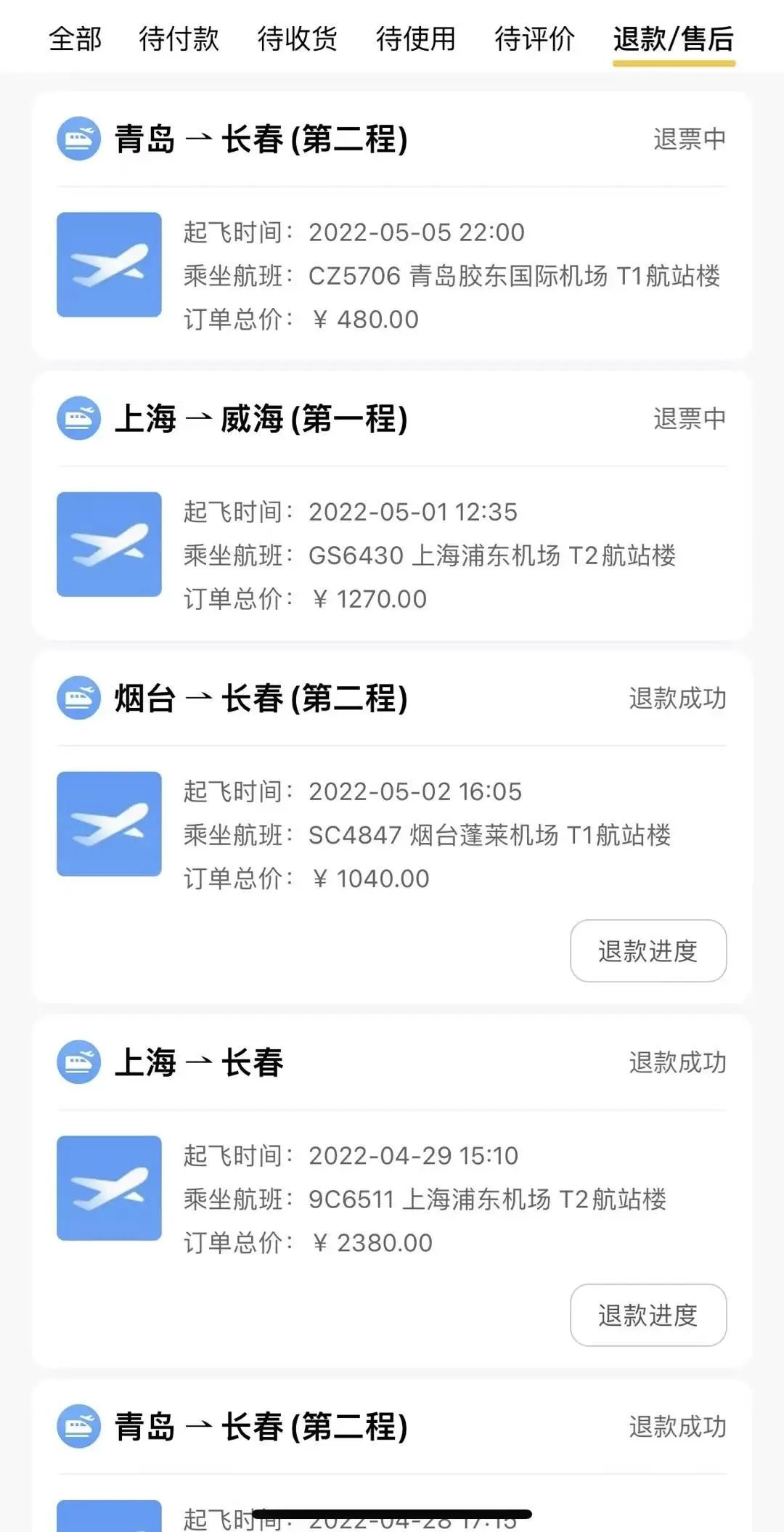

He bought direct flights from Shanghai to Changchun, flights to Dalian, and flights to nearby cities—all canceled. Desperate, he bought four tickets: Shanghai to Qingdao, Qingdao to Dalian, Dalian to Yantai, and Yantai to Changchun, hoping to zigzag home. But the airline slyly canceled the last leg first, then the middle ones, foiling his plan. “I still have some tickets that haven’t been canceled yet,” he said bitterly. “Just wait—they’ll be gone in a couple of days.”
The longer he stayed, the more desperate he got. Once, an insider told him about a flight to “Tongliao, Liaoning.” He was thrilled—Liaoning is close to home! But after checking, he realized it was Tongliao, Inner Mongolia—nowhere near his home. He bought it anyway. “As long as I can fly, I’ll go anywhere.”
In the past five days, he had 18,000 RMB worth of tickets refunded—about 3,600 RMB per day, or roughly three tickets a day.

All in all, his tickets were canceled over 20 times. “They say let people return home, but the cancellation rate is 100%!” he fumed. Data from March 2022 backs him up: the top three airports for cancellations were Changchun Longjia (100%), Nanchang Changbei (97.0%), and Shenyang Taoxian (95.1%).
The timing of cancellations was especially sneaky. Every time Mikey called the airline, they’d say, “We don’t know, but it’s very likely to be canceled.” Like a flaky partner who won’t break up with you but keeps you hanging. “They use your money to earn interest between sale and refund, squeezing you dry,” Mikey said. He saw through the game but had no choice.
The worst was when his flight was scheduled for the next morning, and it hadn’t been canceled by the afternoon. He thought, “This time they’ll let me fly.” So on April 25, he signed a pledge not to return to school before the lockdown ended, hitched a police car to Pudong Airport, and prepared to leave. Then his phone buzzed: “Due to public health reasons, your ticket has been canceled.”
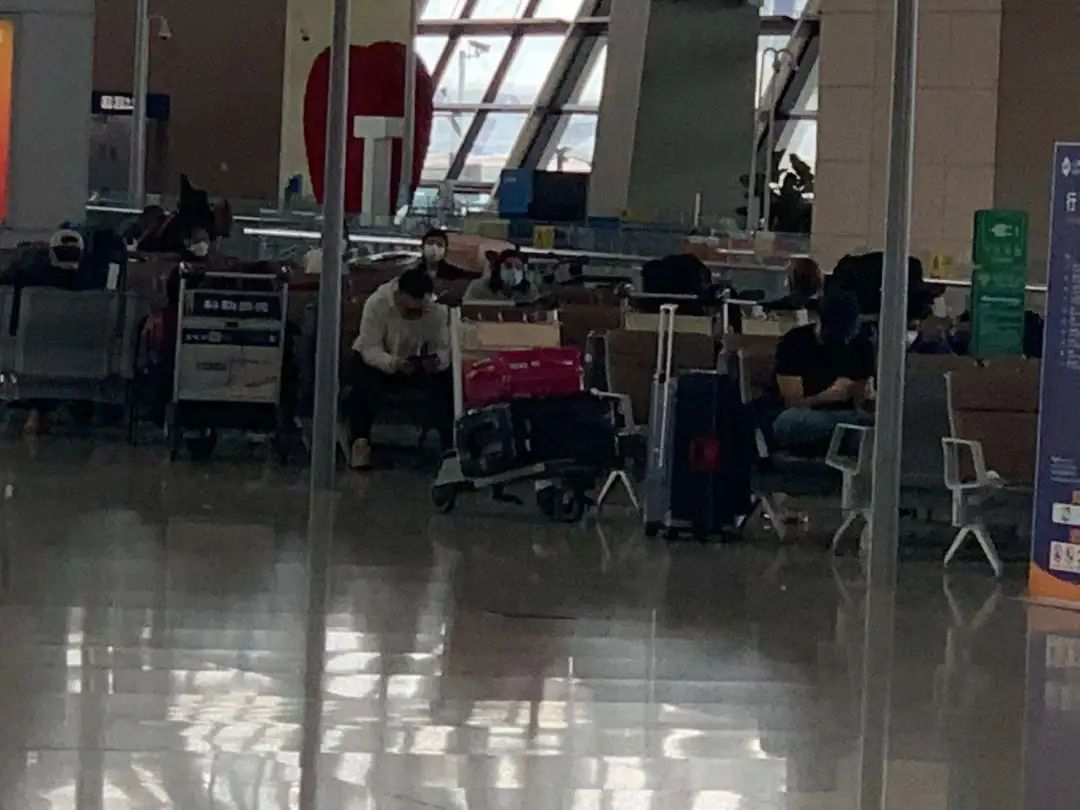
With no school to go back to, and nearby hotels either full, expensive, or suddenly locked down, Mikey ended up living in the airport.
Another traveler, Muzi, who was flying to Bangkok, had booked a hotel near the airport. On the taxi ride there, the hotel confirmed she could check in. But 20 minutes later, when she arrived, a row of “Da Bai” (white-clad medical workers) stood at the entrance—the hotel had been sealed off, no entry or exit. So sleeping in the airport became the safest bet.
The “Stranded Chain” at Pudong Airport
“Fangcang Uncle” Hai and Shanxi guy Zhang Yun ended up at Pudong Airport around the same time as Mikey. Both were trying to fly to northern Chinese cities.
Of course, to even get into Pudong Airport during lockdown, you needed a canceled ticket and a 48-hour negative nucleic acid test. Once, Mikey stepped out of the airport for a few seconds to grab takeout, and when he came back, security stopped him—he needed to show his 48-hour test result.
“Fangcang Uncle” had come from Yantai, Shandong in March with some fellow townsmen, riding a truck to a Fangcang makeshift hospital in Baoshan District, Shanghai. He worked as a security guard there for a month. When he heard his elderly father was unwell, he wanted to go home. The job paid a few hundred RMB a day, but he hadn’t completed the full term, so there was some friction with the agency. When I spoke to him, he’d been stranded for over a week. His first words: “What we need is to get out of Shanghai quickly.” In his Shandong-accented Mandarin, he said angrily, “We risked our lives, could get infected any time, to support Shanghai. Now we can’t even go home. It’s infuriating.” Then he asked eagerly, “Are you a reporter? I heard that provincial governments are sending special buses to take volunteers like us back for quarantine. Is that true?”
Mikey often acted as Uncle Hai’s translator: “When people can’t understand him, I translate.” He said Uncle Hai wasn’t good with smartphones, couldn’t book tickets, and relied on word of mouth for information.
Zhang Yun, from Shanxi, lived in Caolu Town, Pudong New Area, in a “urban village”—a low-rent area that’s a hub for migrant workers. When the lockdown started, their situation was worse than those in regular residential compounds—they couldn’t get food supplies. Zhang Yun managed to escape the urban village, only to be trapped in the airport.
Luckily, Mikey, Uncle Hai, and Zhang Yun are all from northern China, so they bonded quickly. They ate together, slept together, and booked tickets together. During their stay, they were interviewed by four or five media outlets and became airport celebrities. “But now I feel like a beggar,” Zhang Yun said helplessly.
The stranded passengers at Pudong Airport roughly split into two groups: those flying domestic and those flying international. Domestic flights had the highest cancellation rates, so that group was larger, with further subdivisions by region (north vs. south). International flights were more reliable, but a few people still got left behind. Guitian, who flies between Shanghai and Tokyo, met two women at the airport: “Auntie Zurich” (flying to Zurich) and “Auntie Toronto” (flying to Toronto). Auntie Zurich was from Dalian and got stranded while transiting in Shanghai. The morning Guitian flew out, she was in tears over another cancellation, but by the time he reached his transit city, she had already made it to Seoul and then on to Zurich.
Mikey said that those flying to northern Chinese cities were at the bottom of the “stranded chain” at Pudong Airport.
Every time a plane took off nearby, it jolted his nerves. “Did you hear that? Another plane just left.” He’d watched dozens take off: “To Vancouver, Toronto, Singapore, Hong Kong, Taiwan. Not long ago, one to Nanning, Guangxi.”