The Schwarzwald (Black Forest) is Germany’s most famous forested region — a 160km-long, 60km-wide upland area in Baden-Württemberg, southwest Germany. Here is what it is, why the name, and where the experience is best.
What the Black Forest Is
The name (Schwarzwald) derives from the dense canopy of fir and pine trees that historically blocked light and gave the forest a dark appearance. The region is an upland massif with peaks reaching 1,493m (Feldberg, the highest point). It is bounded to the west by the Rhine valley and to the east by the Swabian Alb plateau. The landscape has three distinct sections: the Northern Black Forest (Nordschwarzwald) — more rolling, more forested, centred on Freudenstadt and Baden-Baden; the Middle Black Forest (Mittelschwarzwald) — lake-studded, centred on Freiburg; and the Southern Black Forest (Südschwarzwald) — the highest elevations, most dramatic scenery, centred on the Feldberg area. The character: small towns with half-timbered houses (Fachwerk), farms with the distinctive wide roof of the Black Forest farmhouse (Schwarzwälder Bauernhaus), valley streams, and the famous Black Forest lake (Titisee — somewhat over-touristed) and the calmer Schluchsee (the largest natural lake in Baden-Württemberg).
What to Do and Where
Freiburg im Breisgau: the unofficial capital of the Black Forest region — a university city (30,000 students in a city of 230,000), with a Minster (Gothic cathedral, 13th–16th century, one of the finest in Germany), a lively old town market square, and excellent access to the surrounding forest. The city is notable for its Bächle — small water channels running through the pedestrianised streets (medieval origin, used for fire prevention and watering animals) — and for its cycling infrastructure. Baden-Baden: the most elegant town in the region — a 19th-century spa destination where European aristocracy and the Russian literary intelligentsia (Turgenev, Dostoevsky, Brahms) stayed. The Kurhaus (casino and concert hall) is the visual centrepiece. The thermal baths: Friedrichsbad (Roman-Irish bath experience, 3 hours, no clothing permitted, one of the great European bath experiences) and Caracalla (modern, with swimwear). Driving the Schwarzwald Hochstrasse (Black Forest High Road, B500): the ridge road running from Baden-Baden south toward Freudenstadt, with panoramic views over the Rhine plain toward the Vosges and the Alps. The cuckoo clock: Triberg, in the Middle Black Forest, claims to be the origin of the cuckoo clock (disputed with other villages) and has several large clock shops — a tourist experience but an unavoidable one if you’re in the area. The Gutach open-air museum: traditional Black Forest farmhouses relocated and reassembled as a living museum — the best place to understand the traditional architectural form.
Black Forest Food and Cake
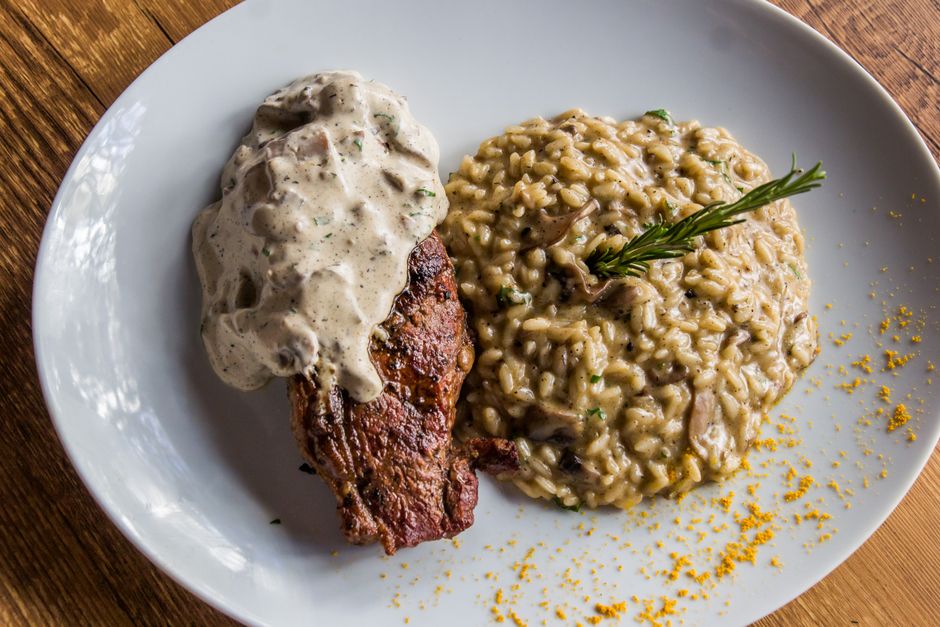
The Schwarzwälder Kirschtorte (Black Forest cake): layers of chocolate cake, whipped cream, and cherries soaked in Kirschwasser (cherry schnapps) — the original form bears little resemblance to what is sold internationally as “Black Forest gateau.” In the region, it is a serious and rather delicious confection. Kirschwasser: the clear cherry schnapps distilled in the Black Forest, used in cooking and drunk as a digestif. Schinkenwurst: Black Forest ham (Schwarzwälder Schinken, PGI designation) — cold-smoked and air-dried, with a distinct flavour from the combination of fir-wood smoke and the mountain air-drying process. Baden wine: the Black Forest’s western slopes face south and west toward the Rhine, producing some of Germany’s most southerly wines (Burgundy varieties — Spätburgunder, Weißburgunder, Grauburgunder, Riesling), lighter and more aromatic than northern Germany’s Rhine wines.