Ljubljana (population 295,000) is one of Europe’s most overlooked capital cities — a compact, walkable city with a medieval castle, a Baroque old town, a lively café culture, and a genuinely pleasant scale that the major European capitals have long since lost. Slovenia’s location (bordering Italy, Austria, Hungary, and Croatia) makes Ljubljana an excellent base for day trips, and the country itself — despite being smaller than New Jersey — has extraordinary natural diversity.
The City
Ljubljana Castle (Ljubljanski grad): the castle on the hill above the old town — a 12th-century fortification expanded over the following centuries, now housing a museum of Slovenian history. The most important thing about the castle is the view: 360-degree panorama of the city and, in clear conditions, the Julian Alps to the northwest (including Triglav, Slovenia’s highest peak at 2,864m and national symbol). Access: funicular from the old town (€4 round trip) or 20-minute walk. The Triple Bridge (Tromostovje): Jože Plečnik’s most famous urban intervention — in 1931, the architect added two pedestrian bridges flanking the existing central vehicular bridge, creating an unusual triple-bridge plaza between the old town and the modern city. Plečnik (1872–1957) transformed Ljubljana in the interwar period — his influence is visible in the covered market along the Ljubljanica river, the National and University Library (his masterpiece — the exterior wall alternating rough and smooth stone representing the transition from old to new), and dozens of other interventions throughout the city. The Ljubljanica river: the narrow green river flowing through the old town is the defining feature of Ljubljana’s character — lined with outdoor café terraces in summer, the riverfront is where Ljubljana lives its social life. The Sunday antique market: held on the Breg (riverbank), every Sunday except winter — one of the most enjoyable in Central Europe. The Central Market (Pogačarjev trg): Plečnik’s covered arcades along the river, functioning daily as the city’s main food market — fresh vegetables, cheese, honey, dry goods, local craft.
Day Trips from Ljubljana
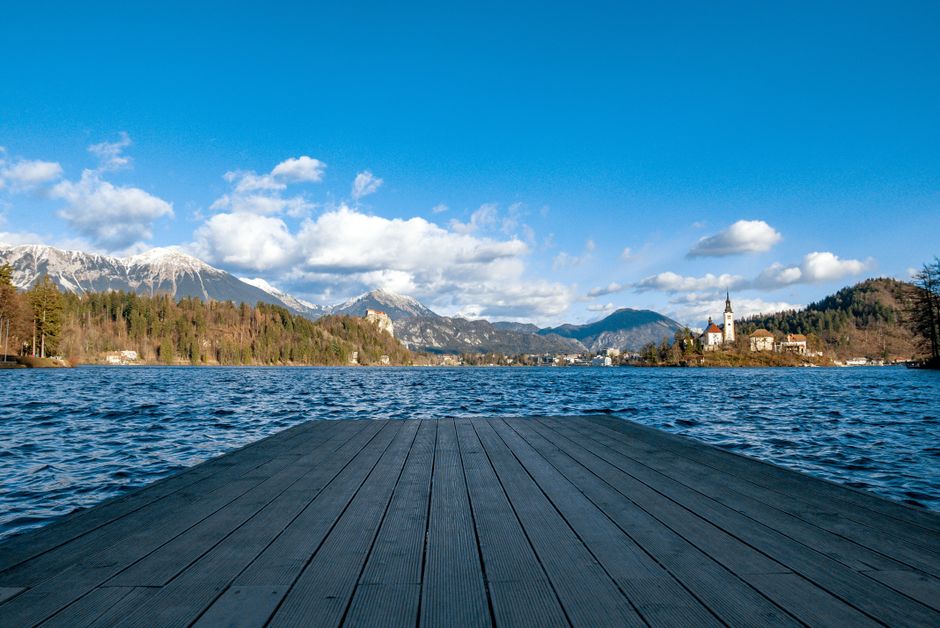
Lake Bled (Blejsko jezero): 55km northwest of Ljubljana (1 hour by bus or car) — one of the most photographed lakes in Europe. An island with a small Baroque church, a medieval castle on the cliff above, and the Julian Alps in the background. The lake warms enough for swimming in summer. The cream cake (kremšnita) at the Bled Festival Hall is the local speciality. Lake Bohinj (Bohinjsko jezero): 26km beyond Bled, in Triglav National Park — larger and wilder than Bled, with no island church, substantially fewer tourists. The better lake for hiking, kayaking, and outdoor experience. The Vintgar Gorge (Soteska Vintgar): 4km northwest of Bled — a 1.6km wooden walkway through a limestone gorge carved by the Radovna river, passing four waterfalls and pools. Very popular (book in advance or go early). Postojna Cave (Postojnska jama): 50km south of Ljubljana — one of the longest cave systems in Europe (27km explored), with 5.7km accessible by tourist train. The cave’s resident species include Proteus anguinus (the olm — a blind, cave-adapted salamander that can survive a decade without food). The Predjama Castle: 9km from Postojna — a Renaissance castle built into a cave opening in a cliff face, one of the most dramatic castle settings in Europe. The Karst region: the limestone plateau southwest of Ljubljana that gave the world the word “karst” (geological formations of limestone caves and dolines). The wine (Teran), the cured ham (pršut), and the villages are worth a half-day.