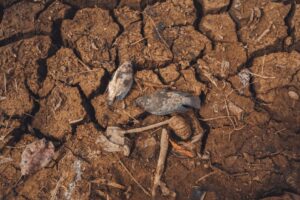
Climate Migration/Displacement refers to population movements driven by climate change-related factors, including: **sudden climate events** (floods, typhoons, wildfires) causing short or long-term displacement; **slow-onset climate change** (desertification, sea level rise, land degradation, heatwaves making agriculture unsustainable) causing migration decisions under chronic pressure. Climate factors are rarely the sole reason for migration — they typically intertwine with economic conditions, political stability, and social networks, making “climate migrants” legally and statistically difficult to clearly distinguish from other migrant categories.
## Scale Projections and High-Risk Regions
The World Bank’s 2021 “Groundswell” report estimates climate change could generate internal climate migration in Sub-Saharan Africa, South Asia, and Latin America by 2050. Particularly vulnerable areas: **low-lying coastal areas** (Bangladesh, Vietnam’s Mekong Delta, low-lying parts of China’s Yangtze River Delta, Pacific island nations) facing combined sea level rise + storm surge threats; **arid and semi-arid zones** (Middle East, North Africa, sub-Saharan Africa, Central Asia) facing sustained drought and water resource depletion; **Himalayan and Andean glacial zones** where downstream agriculture depends on glacial meltwater — glacier retreat will cause water shortages following “peak water” within decades.
## China’s Climate Adaptation Challenges
China’s climate adaptation faces unique challenges: mega urban agglomeration (Beijing-Tianjin-Hebei, Yangtze River Delta, Pearl River Delta) urban heat island + urban flooding risks; water resource pressure in northwest arid zones and the Loess Plateau; sea level rise threats to coastal cities (Shanghai, Guangzhou, Ningbo); ecosystem degradation in western plateaus (Three Rivers Source, Yellow River source area) affecting middle and lower reaches water security. China has formulated the National Climate Change Adaptation Strategy 2035, covering adaptation measures in water resources, agriculture, ecosystems, oceans, and urban-rural construction — but urban flooding (like Zhengzhou July 2021) and extreme heat events expose existing urban infrastructure planning’s adaptation gaps.
## International Governance Challenges: The Legal Vacuum on Climate Refugees
The current Refugee Convention (1951) contains no “climate refugee” category — people displaced by climate change don’t fit the legal definition of “persecution based on race, religion, nationality, political opinion, or membership in a particular social group.” This means most climate migrants enjoy no protection under international law frameworks. Attempts to fill this gap: 2023 UN General Assembly resolution on climate-related displacement; Pacific island nations’ push for international climate refugee protection framework negotiations; New Zealand’s “Pacific Access” plan (providing limited humanitarian migration quotas for Pacific island nations).
See [The Scientific Basis of Global Warming](https://sunqi.org/climate-change-science-basics-en/), [Extreme Weather Science](https://sunqi.org/extreme-weather-science-en/), and the [World Bank Groundswell Report](https://www.worldbank.org/en/topic/climatechange/publication/groundswell-report).